Papua New Guinea: No Thunder, No Rain

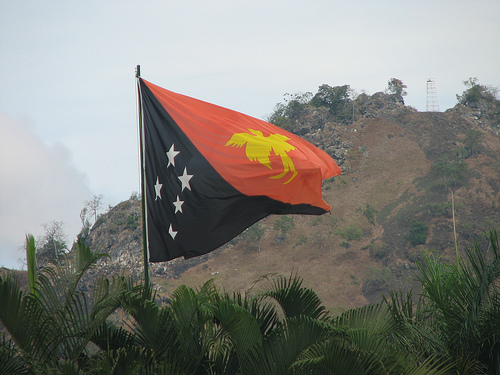
Where is Papua New Guinea headed? photo: Drew Douglas/flickr

Papua New Guinea (PNG) can be a little confusing. Although it shares half of the island of New Guinea with Papua – an Indonesian province – Papua New Guinea is distinctly different from its neighbor. Indeed PNG seems to exist in a world of its own – one plagued by political mismanagement, human rights abuses, corruption, and low levels of development.

Contrary to the outbursts of unrest in the Middle East, however, the peoples of PNG are highly unlikely to lead protests or a revolt against their government. PNG is a country of incredible linguistic and cultural diversity – though perhaps surprisingly, not in terms of religion (96 percent are Christian). It is also a relatively “young” country, having only gained independence in 1975. The current Prime Minister, Sir Michael Somare, has been in and out of power in PNG since 1972, and like certain other political heads of state, seems not to want to relinquish his position. Just over a month ago, the government successfully evaded another vote of no confidence by using its majority to adjourn parliament until May. Deputy opposition leader Bart Philemon notes that by the next election, there will have been 10 years of (relative) political stability – but hardly any improvement in the standard of living for the majority of the population.

Iran: Little Room for Maneuver

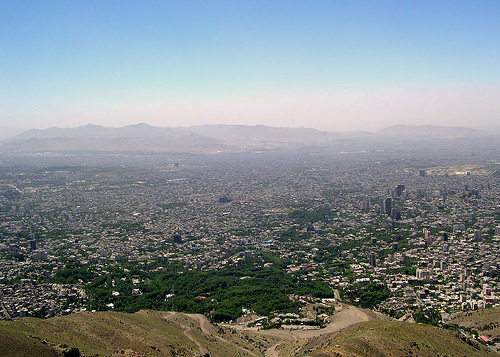
Tehran - back in the limelight? Photo: Mohammadali f./flickr

Although the rest of the Middle East is now rightly in the spotlight, Iran, with a simmering opposition movement and a highly controversial nuclear program (the focal point in regional diplomacy prior to the ‘Jasmine revolutions’) will no doubt return to the forefront of regional affairs very soon. However, the diplomatic equation in the conflict between Iran and the West may be changing, and contrary to the sometimes hysterical warnings of some commentators in the West and the bellicose rhetoric of Iran’s president, Tehran is in a corner. Below some points to keep in mind when analyzing the situation:

  • What country, more precisely what regime, currently faces an existential threat and finds itself surrounded by the world’s most powerful fighting force on three of four borders (principally Afghanistan and the Persian Gulf, but also Iraq): nuclear-armed Israel or Iran?
  • How much of this all is a securitization game? Prime Minister Netanyahu and especially Israel’s political right keep the focus on the country’s purported ‘insecurity’ and off the West Bank; President Ahmadinejad, in turn, exploits the external threat to consolidate support back home and divert attention from his lousy track record in actually governing Iran.
  • If Iran decides to weaponize, will it not first withdraw from the Nuclear Non-Proliferation Treaty (NPT)? The 1980 Vienna Convention on the Law of Treaties and the NPT, which the US and Iran have both signed and ratified, respectively, demand it. Although this instance could very well prove the exception to the rule, Iran is not North Korea. Iran maintains relations and accords with many other states in the international system, all of which count on it to uphold some modicum of predictability. It is likely to do so despite its belligerent rhetoric.
Categories
Uncategorized

ISN Insights: Look Back, Week Ahead

The new ISN Insights week starts today, stay tuned. Photo: Caro's Lines/flickr

Last week, ISN Insights looked at:

This week is BRIC week: We’ll be taking a closer look at the rapidly growing economies and political prospects of the BRIC giants – plus Indonesia, an aspiring group member. Stay tuned and remember to check back every day.

Categories
CSS News

CSS Analysis: Progress in Biotechnology as a Future Security Policy Challenge

The next frontier of security policy? photo: Krystian "Krane" Schneidewind/flickr

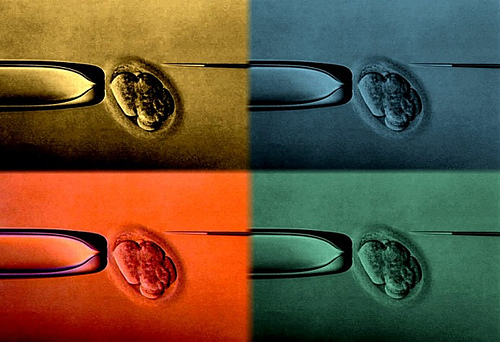
In the newest CSS Analysis, Progress in Biotechnology as a Future Security Policy Challenge, Sergio Bonin examines how biotechnological advances might impact security policy in the future.

He notes: “If the synthetic construction and modification of bacteria and viruses should become a reality, a broad range of useful applications in medicine, environmental protection, and other fields would be facilitated. At the same time, however, constructing biological weapons could become easier, and the necessary skills would be available to a larger spectrum of actors. It seems advisable to explore preventive countermeasures at an early stage.”

For more, check out our Digital Library resources on biotechnology.

The Revolution Will be Televised (Tweeted and Streamed)

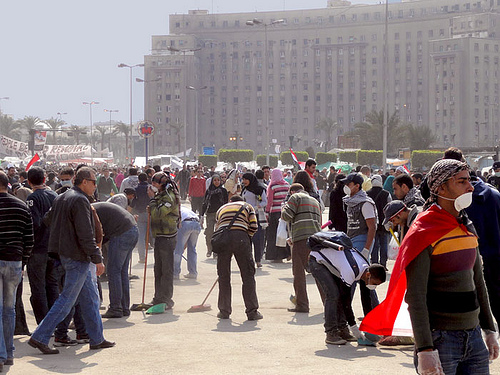
Cleaning up after the protests, but what then? photo: sierragoddess/flickr

As new “days of rage” are announced across the Middle East and as the ‘Jasmine revolution’ spreads across the Maghreb and some of the most entrenched autocracies in the Middle East and Arabian peninsula, the word ‘revolution’ seems to be on everyone’s lips. Although the rest of the world, Europe included, has seen such people power-driven revolutions in the last years, this latest wave really caught the world by surprise.

How is it that decades of authoritarian oppression finally resulted in largely peaceful uprisings that are spreading like wildfire across the region? Did it come as a result of the Bush era’s democracy promotion ‘campaign’, as some right wing American politicians have argued (with just a little congratulatory tap on their own back)? Or should social media tools like Twitter and Facebook be seen as the true champions of this new media-driven process? Perhaps Julian Assange and WikiLeaks should get credit as revelations of the extravagant lifestyle of Tunisia’s first couple drove angry protesters to the streets in the very early stages of this collective Arab revolt against oppression?

Clearly the latter two both played into the complex equation that toppled the regimes of Ben Ali and Mubarak and has put many more regional despots under significant pressure to reform. Ultimately though the credit, and indeed responsibility as these revolutions turn into democracy-building exercises, lies with the people and the leaders of the opposition movements who were brave, daring and ingenious in the timing of the protests and in the way social media platforms and other tools from the handbook of peaceful revolutions were used to an impressive effect. The largely peaceful nature of these infectious uprisings has garnered a lot of praise from around the world, and rightly so. The jubilation on the streets of Tunis and Cairo was an inspiring sight when streamed on iPhones and computer screens around the world.

This is a new age of revolutions against oppression and a new age for global solidarity. The outcome of these revolutions may not yet be known, but there is no doubt that these past weeks have changed Arab and indeed world history for good.

Here are a few select publications from our Digital Library that provide context to these momentous events: