Categories
Uncategorized

زامبيا تثبت سعر الذرة مرة أخرى، مسببة إرباك للبنك الدولي

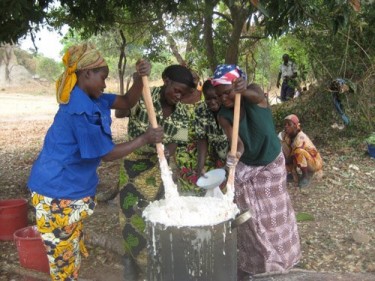
إناء عملاق للنشيما
إناء عملاق للنشيما، زامبيا 2008. الصورة بواسطة المدون مارك هيمسورث (مستخدمة بتصريح)

نشيما، مادة مثل الشعير الثقيل يتم إعدادها وطهيها من الذرة، تسببت في فرقة بين العائلات وأشعلت احتجاجات وأعمال عنف وشغب في زامبيا في بعض الأحيان. ولهذا أهتمت الحكومات اللاحقة بمراقبة أعمال زراعة، وحصاد، وبيع محاصيل الذرة ووجباتها إلى المستهلكين.

يعد إنتاج الذرة أمر هام وخطير حتى في المناطق التي يستخرج منها النحاس مثل منطقة كوبربيلت والمناطق الحضرية مثل العاصمة، لوساكا، حيث تعتمد نسبة كبيرة من العمالة على التزود من المنتج التجاري. ولهذا، يحدد الذرة الاتجاه السياسي للأمة.

في مايو/أيار، طالب البنك الدولي من زامبيا عدم التدخل في تحديد السعر الأدنى لمحصول الذرة الذي يبيعه المزارعون لوكالة حفظ الطعام والجماعات الأخرى المرتبطة بتسويق المنتجات الزراعية. وبالرغم من تلك النداءات، أعلنت وزارة الزراعة عن السعر الأدنى لمحصول الذرة هذا العام 65,000 كواشا أي ما يعادل 13 دولار أمريكي مقابل 50 كيلو معبأه.

أنتقد مدير البنك الدولي لزامبيا، مالاوي وزمبابوي، كاندهافي كاديريسان القرار وقال أن المُزارع الفقير تم استغلاله حيث قام بعض التجار بشراء الذرة منهم وفي نيتهم بيعه بسعر أعلى لوكالة حفظ الغذاء التابعة للدولة. أشار كاديريسان أيضاً إلى قلق البنك الدولي من فشل سياسة الحكومة في ضمان التنمية المستدامة للقطاع الزراعي، بالإضافة إلى بذلها مجهود ضعيف ومتدني لخلق فرص عمل والحد من الفقر.

قد يكون كاديريسان معذوراً. يرتكز القطاع الزراعي في زامبيا على الذرة، بغض النظر عن أية محاصيل أو مواش أخرى. يُزرع أغلب محصول الذرة من قبل الفلاح القروي الذي يواجه الجفاف بانتظام خلال الموسم المطير، وإمداد سيء بسماد باهظ، بالإضافة إلى صعوبات نقل السلعة إلى الأسواق.

في عام 1986، شهدت منطقة كوبربيلت ولوساكا أحداث شغب بسبب ارتفاع سعر الذرة أكثر من مرة في حين إصابة الدخول بالركود. بعد ذلك بأربع سنوات، ازدادت حالة عدم الاستقرار بسبب الأسعار وصلت إلى محاولة انقلاب.

قال وزير الزراعة ايمانويل شيندا معلناً السعر الأدنى لمحصول الذرة الجديد:

لقد أتخذنا هذا القرار لحماية الأمن الغذائي في البلاد وأيضا لضمان تشجيع المزارع البسيط على إنتاج وزراعة المحصول في السنوات القادمة… لضمان تنافسية محصول الذرة الزامبي على صعيد الأسواق العالمية، كما تضمن الحكومة تخفيض تكلفة الإنتاج بين استراتيجيات أخرى، مثل الاستعدادات في التوسع للتدريب الزراعي والنقل لإمداد العاملين بالرؤية والأفكار حول كيفية زيادة الإنتاجية خاصة بين المزارعين البسطاء.

كما كشف شيندا عن استعداد الحكومة لبناء مخازن إضافية وتسهيلات على المدى الطويل لحماية الفاقد في وكالة حفظ الغذاء. أيام قليلة قبل بيان الوزير، دمرت وكالة حفظ الغذاء كميات ضخمة من خزين الذرة الذي فسد في مناطق عديدة في البلاد. قال شيندا :

أرغب في إطلاع الأمة أن أغلب الخسائر الناتجة عن وكالة حفظ الغذاء التي نواجهها بسبب وسائل التخزين غير الملائمة وغير الجيدة… ولمواجهة هذا التحدي، بدأت الحكومة في تنفيذ برامج لبناء وسائل تخزين على المدى الطويل.


(Translation by Mohamed Adel)
Categories
Uncategorized

La Zambie fixe à nouveau le prix du maïs, la Banque Mondiale désapprouve


A giant Nshima pot
Une énorme marmite de Nshima. Zambie, 2008. Photo du blogueur Mark Hemsworth (utilisée avec permission)

Le Nshima, cette pâte compacte ayant l’aspect du porridge et faite à partir de farine de maïs, a parfois divisé les familles et provoqué des émeutes en Zambie. C’est pourquoi les gouvernements zambiens successifs ont gardé un oeil attentif sur la culture, la récolte, l’achat et la vente de farine de maïs aux consommateurs.

La production de maïs est une question encore plus importante dans la région minière de Copperbelt (ceinture du cuivre) et dans les régions métropolitaines comme la capitale, Lusaka, où des populations ouvrières en grand nombre dépendent de l’approvisionnement de ce produit dans les commerces. Ainsi, le maïs détermine la direction politique de la nation.

En mai, la Banque Mondiale a exhorté le gouvernement zambien à éviter d’interférer dans la détermination du prix plancher du maïs vendu par les agriculteurs à l’Agence de Réserve Alimentaire et aux autres parties impliquées dans la chaîne agroalimentaire. Malgré ces injonctions, le Ministère de l’Agriculture a annoncé le prix plancher du maïs : 65 000 K (environ 13 $US) par sac de 50 kg pour cette année.

Le directeur régional de la Banque Mondiale pour la Zambie, le Malawi et le Zimbabwe, Kundhavi Kadiresan, a critiqué cette décision et affirmé que les petits agriculteurs zambiens se faisaient exploiter par des spéculateurs qui achètent leur maïs en espérant le revendre à l’Agence de Réserve Alimentaire du gouvernement à un prix plus élevé. Kundhavi Kadiseran a aussi signalé la profonde inquétude de la Banque Mondiale non seulement devant l’incapacité des politiques gouvernementales à assurer le développement à long terme du secteur agricole mais aussi devant le peu d’efforts consentis en vue de la création d’emplois et de la réduction de la pauvreté.

On peut comprendre Kadiseran. Outre les autres cultures et l’élevage, l’agriculture zambienne est basée sur le maïs. La majeure partie du maïs est cultivée par des paysans qui subissent régulièrement la sécheresse pendant ce qui devrait être la saison des pluies, souffrent d’un approvisionnement en engrais peu fiable et coûteux et rencontrent des difficultés à transporter leurs produits vers les marchés.

En 1986, les Zambiens de la Copperbelt et de Lusaka s’étaient soulevés contre une hausse démesurée du prix du maïs alors que leurs revenus étaient restés constants. Quatre ans plus tard, des émeutes liées à la hausse des prix avaient même engendré une tentative de coup d’Etat.

Après avoir annoncé le nouveau prix plancher du maïs, le Ministre de l’Agriculture et de l’Elevage, Emmanuel Chenda, a déclaré :

Nous avons pris cette décision afin de protéger la sécurité alimentaire au niveau national et aussi pour s’assurer que les petits exploitants ne se détournent pas de cette culture dans les années à venir…Pour assurer la compétitivité du maïs zambien sur les marchés internationaux, le gouvernement va participer à la réduction des coûts de production grâce, entre autres stratégies, à la dispense de formations d’extension agricole et l’octroi de moyens de transport pour les travailleurs en vue d’augmenter la productivité des petits exploitants.

Chenda a aussi dévoilé des programmes gouvernementaux de construction d’infrastructures de stockage supplémentaires, une mesure au long cours destinée à éviter le gaspillage. Cela sera supervisé par l’Agence de Réserve Alimentaire (FRA, acronyme anglais). Quelques jours avant la déclaration du ministre, la FRA avait détruit une énorme quantité de maïs avarié stocké dans diverses régions à travers le pays. Chenda s’est exprimé à ce sujet :

Je souhaite informer la nation que la plupart des pertes de la FRA dont nous avons été témoins sont dues aux infrastructures de stockage insuffisantes et inadéquates…Afin de surmonter ce problème, le gouvernement a commencé à mettre en place des programmes de construction d’infrastructures de stockage supplémentaires. Cette mesure va s’incrire dans la durée.

(Translation by Marie-Laure Le Guen)


For further information on the topic, please view the following publications from our partners:

Agricultural Development in a Changing Climate in Zambia: Increasing Resilience to Climate Change and Economic Shocks in Crop Productionfrom the German Development Institute, Bonn, Germany.

Food Price Transmission: Rising International Cereals Prices and Domestic Marketsfrom the Overseas Development Institute (ODI), London, United Kingdom.

How do Food Prices Affect Producers and Consumers in Developing Countriesfrom the International Centre for Trade and Sustainable Development (ICTSD), Châtelaine (Geneva), Switzerland.


For more information on issues and events that shape our world please visit the ISN’s Security Watch and Editorial Plan.

Categories
Uncategorized

A Peek Inside Saudi Social Media

Saudi Social Media Day #SMDRiyadh 2011
Saudi Social Media Day #SMDRiyadh 2011. Photo: b_abdullah/flickr.

The Foundation for the Defense of Democracy released an unprecedented survey yesterday of the Saudi social media sphere—a vast space on Twitter, Facebook, and a host of blogs, message boards, and mobile applications. Their findings offer a striking picture of a country that is, in the lead author Jonathan Schanzer’s words, usually “very much a black box” to the outside world. The portrait that emerges is that of a vastly conservative and controlled country, but one where new voices—ranging from women to liberals to religious extremists—are beginning to find a voice online.

The study, “Facebook Fatwa,” was originally commissioned to coincide with the 10-year anniversary of the 9-11 attacks, an event that inspired a radical shift in Saudi Arabia’s official response to extremist rhetoric, including online. The authors were interested in how plentiful and widespread such inciting language is in Saudi social media today, following a decade of state attempts to curtail it with harsh laws governing freedom of expression and extensive programs to reform would-be jihadists.

Categories
Uncategorized

Syria Drives a Wedge Between Turkey and Iran

Turkey and Iran
Turkey and Iran. Image: Truthout.org/flickr.

The Iranian-Turkish conflict about the future of the Assad regime in Syria has the potential to set back relations between Ankara and Tehran by decades. However, the conflict has not reached a tipping point and it is unlikely to do so as long as the Iranian-Turkish rivalry is limited only to tactical efforts by each side in shaping the power struggle in Syria. What will significantly change the Iran-Turkey-Syria equation is if Tehran concludes that Turkey is leading a protracted US-backed drive to bring about regime changes in the Middle East and that “Libyan model” can be repeated first in Syria and later in Iran. Absent of such a scenario, Iran is neither overly free to shape the outcome in Syria nor reliant on the Syrian regime to the degree where it will risk all other regional interests to prop up Assad.  Seen from Tehran, the potential loss of the Assad regime is a recoverable strategic setback if it does not have a spillover effect that directly challenges the Islamic Republic’s grip on power in Tehran. Iran’s relations with Syria were from the beginning a marriage of convenience and plenty of suspicion existed in Damascus-Tehran relations before the Arab Spring. The post-Saddam Shia elite in Baghdad have already turned Iraq into Tehran’s key Arab ally and regional priority.

Categories
Global Voices

India, Bangladesh: Water Disputes and River Diplomacy

Aerial View of Teesta River
Aerial View of the Teesta River. Flickr photo by Prato9x (CC-BY-NC-ND 2.0)

India and Bangladesh share 54 rivers between them. Despite setting up a Joint River Commission for water management as early as 1972, tensions between the countries on how to share resources recently came to a head in a dispute over the Teesta River. At stake are the lives of countless people from West Bengal and Bangladesh who depend upon the river for survival.

To date, only one comprehensive river pact has been signed by India and Bangladesh – a 1996 bilateral treaty that established a 30-year water-sharing arrangement between the two countries.  This was set to change in September 2011 when India’s Prime Minister, Dr. Manmohan Singh, was due to sign a pact with his Bangladeshi counterpart regarding access and use of the Teesta River.

The Teesta – which has its source in Sikkim – flows through the northern part of West Bengal in India before entering Bangladesh, where after coursing through about 45km of irrigable land, merges with the Brahmaputra River (or Jamuna when it enters Bangladesh). In 1983, an ad-hoc water sharing agreement was reached between India and Bangladesh, whereby both countries were allocated 39% and 36% of the water flow respectively.  The new bilateral treaty expands upon this agreement by proposing an equal allocation of the Teesta River.