China’s Next Transformation

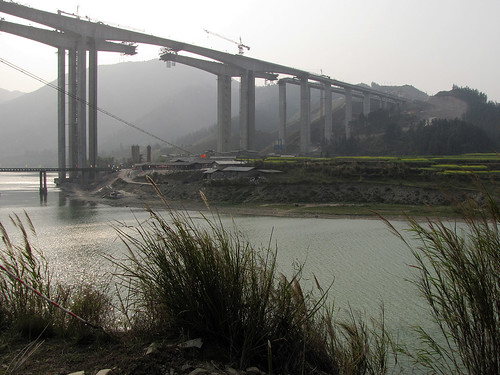
Highway construction Guizhou
Highway construction Guizhou. Photo: sweart/flickr.

HONG KONG – During three decades of favorable global economic conditions, China created an integrated global production system unprecedented in scale and complexity. But now its policymakers must deal with the triple challenges of the unfolding European debt crisis, slow recovery in the United States, and a secular growth slowdown in China’s economy. All three challenges are interconnected, and mistakes by any of the parties could plunge the global economy into another recession.

To assess the risks and options for China and the world, one must understand China’s “Made in the World” production system, which rests on four distinct but mutually dependent pillars.
Asian Nationalism at Sea

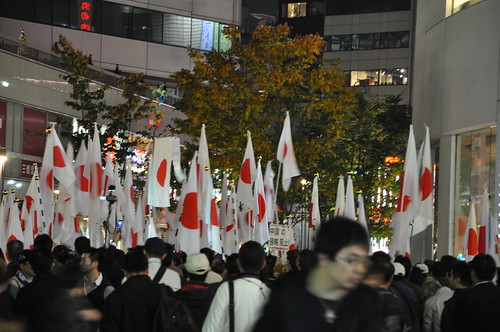
Anti-China protests in Tokyo
Anti-China protests in Tokyo, courtesy of TAKA@P.P.R.S/flickr.

CAMBRIDGE – Will war break out in the seas of East Asia? After Chinese and Japanese nationalists staged competing occupations of the barren landmasses that China refers to as the Diaoyu Islands and Japan calls the Senkaku Islands, angry demonstrators in the southwestern Chinese city of Chengdu chanted, “We must kill all Japanese.”

Likewise, a standoff between Chinese and Philippine vessels in the Scarborough Shoal in the South China Sea led to protests in Manila. And a long planned step forward in cooperation between South Korea and Japan was torpedoed when the South Korean president visited the barren island that Korea calls Dokdo, Japan calls Takeshima, and the United States calls the Liancourt Rocks.

One should not be too alarmist. The US has declared that the Senkaku Islands (administered by the Okinawa Prefecture when it was returned to Japan in 1972) are covered by the US-Japan security treaty. Meanwhile, the standoff over the Scarborough Shoal has calmed down, and, while Japan recalled its ambassador from South Korea over the Dokdo incident, it is unlikely the two countries would come to blows.

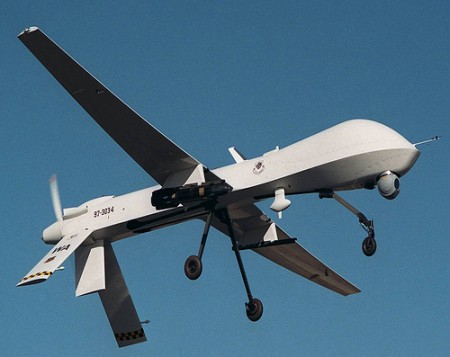
Drones in Our World, Part IV: Adapting a Warfighter


Current and Future Capabilities of UAVs in International Humanitarian Interventions

Aerial surveillance and remote sensing are nothing new in the world of combat reconnaissance, but they are new tools in the arsenal of the humanitarian relief and development communities. And they are rapidly evolving. Complex, disaster, and rapidly evolving environments all require the capability to promptly collect, analyze, and disseminate critical information that UAVs can gather and exploit in ways and quantities that other resources cannot rival.

Away, but not apart, from wars

In addition to the myriad uses of UAVs in combat environments—including non-kinetic roles—discussed in the previous installation of this series, UAVs can also serve as neutral observers for ceasefire monitoring or other peacekeeping missions.

Unlike data reported by humans, the information collected and conveyed by drones is inherently neutral. When information is delivered based upon objective rather than subjective collection practices, it is easier to make more accurate assessments of issues. The state of affairs depicted in the raw imagery and the resulting analytical products are based on factual observations and serve as a force multiplier and verifier of human-collected information or verbal reports.

The New Information Superhighway: Practical Methods for Sharing Knowledge and Stemming Destabilizing Arms Flows

Nearly all destabilizing arms transfers to conflict zones and areas targeted by UN or EU sanctions are clandestine in nature, making monitoring difficult and prevention harder still. However, instead of attempting to create new instruments to tackle these problems, more efficient use can and should be made of existing mechanisms to enforce EU and UN arms embargoes. A recent incident involving a Russian-owned flag of convenience ship that attempted to deliver helicopter gunships to Syria demonstrated the potential effectiveness of such mechanisms.

The MV Alaed was prevented from delivering arms to Syria because the British insurer of the ship withdrew coverage after its EU-embargoed destination was made public. In June 2012, the Alaed was forced to return to Russia, where its cargo of gunships and missiles was unloaded.

Human Rights of North Korean Defectors in Dire Straits

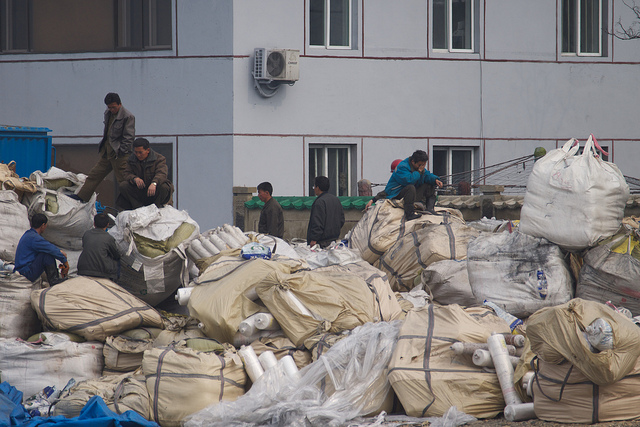
Dadong, North Korea. Image by Joseph A Ferris III/Flickr.

On August 3rd, South Korean human rights activist Kim Young-hwan and three colleagues held a press conference accusing Chinese authorities of detainment and torture due to their work with North Korean refugees. China has denied the allegations.

The activists were staying in Dalien, a major city in the southern Chinese province of Liaoning, assisting North Korean defectors and raising awareness of the dire human rights situation in North Korea (the original cause for their arrest). Mr. Kim said that he and his colleagues were beaten and tortured with electricity for “threatening the national security of China,” that both the Chinese and the North Korean governments were clandestinely engaged in their arrest and torture, and that the Chinese government intentionally delayed a consulate meeting.

Torture and harsh treatment for human rights activists such as Kim Young-hwan – who is a former supporter of North Korea’s first leader Kim Il-sung, but later became disillusioned with the regime’s absolutism and human rights abuses – highlight the tensions between South Korea and China as well as the ill treatment of North Korean defectors by the Chinese government.