The New Nuance in Chinese Diplomacy

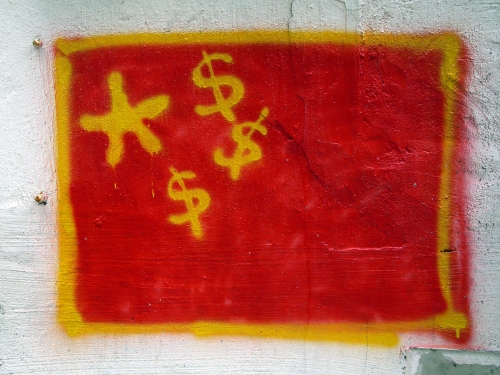
Chinese flag with Dollar signs. Image: Magalie l’Abbé/Flickr

This article was originally published by the East Asia Forum on 24 November, 2014.

Much energy has been expended on projecting the impact of the rise of Chinese economic power on its political and military might and the strategic contest with the United States. In a conflation of geo-economic and geo-strategic analysis, two camps have emerged: one warns about the consequences of the United States not conceding strategic space as Chinese economic and strategic power continue to grow; the other asserts the continuing dominance of US military-strategic and economic power as Chinese power peaks, in some scenario or another. As the nuance in Chinese diplomacy over the past week or two suggests, the geo-political and economic world would appear a tad more complex than either camp allows.

Categories
Humanitarian Issues

Minimum Criteria for Sustainable Global Governance

The globe. Image: geralt/Pixabay

Strong statist positions and a fixation on state sovereignty once inhibited progress toward more just and effective models of global governance. However, there can be no denying that globalization has not only led to the unprecedented transformation of our societies, but also the role that states play in the international system. Yet, even as states gradually share more responsibilities with corporations, sub-national entities and international organizations, their structural significance still remains indisputable – particularly when it comes to finding near-term solutions for better modes of global governance. This should result in a more equitable and representative international state system to which global governing structures will remain accountable.

Categories
Regional Stability

Frozen Donbas?

A Soviet-era monument in the city of Donetsk. Image: Andrew Butko/Wikimedia

This article was originally published by the Carnegie Moscow Center on 17 November 2014.

Russia is invading Ukraine, again. As usual, the Russian Ministry of Foreign Affairs has refuted hard evidence from journalists and international observers. Both NATO and the OSCE have confirmed that heavy weaponry and combat troops are moving to Donbas from Russia. A detailed look suggests that although the ceasefire has been seriously violated (again), what we see is mostly a tactical operation aimed at reinforcing rebel positions, not preparation for a full-fledged war.

Categories
Regional Stability

Mexico’s Low Point

http://en.wikipedia.org/wiki/File:The_Mexican_Flag.jpg
Mexican flag. Image: Lisette/Wikimedia

This article was originally published by theIPI Global Observatory on 21 November 2014.

Mexico’s President Enrique Peña Nieto is in the most difficult period of his presidency, with vociferous protests over the disappearance of 43 teachers-in-training in the state of Guerrero fueling angry calls for his resignation. At the same time, his government is facing accusations of corruption. Taken together, the two problems seriously undermine the image of Mexico that the president and his team have worked to promote around the globe.

Book Review: The Violence of the Image: Photography and International Conflict, edited by Liam Kennedy and Caitlin Patrick

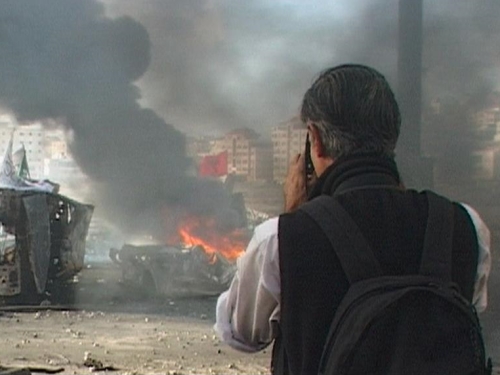
Famous photographer James Nachtwey in the documentary movie “War Photographer”. Image: Christian Frei Switzerland/Flickr

This book review was originally published by LSE Review of Books on 10 November, 2014.

Recognizing the evolution of the nature of war, this book examines the role of photojournalism in representations of violence that accompany various modern and contemporary conflicts. The book, stretching eleven chapters, surveys the depictions of violence in photographic practice under (post-)colonial, complex humanitarian and cosmopolitan frameworks. Of note is the diversity of authors and the array of disciplinary lenses they represent. The book is relevant within a range of subjects as well as to practitioners.