A Framework for Nordpolitik Following the Death of Kim Jong Nam

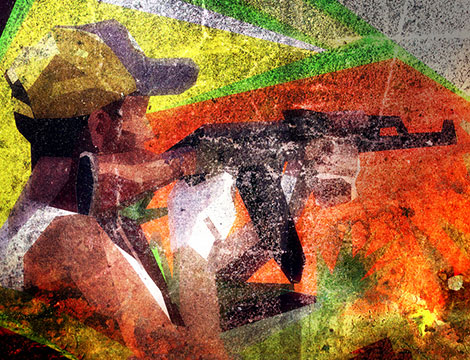
Courtesy of jennybento/Flickr. (CC BY-SA 2.0)

This article was originally published by Pacific Forum CSIS on 9 March 2017.

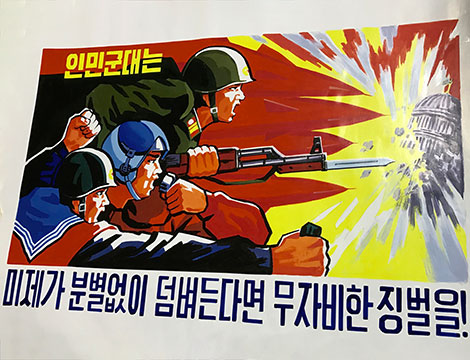
On Feb. 13, 2017, Kim Jong Nam, half-brother of North Korean leader Kim Jong Un, was assassinated in Malaysia. South Korean responses to the murder have been mixed. For some, it is confirmation of the tyrannical, despotic nature of the Pyongyang leadership, a call to stiffen South Korean resolve and a reminder to double down on security measures. For others, it is proof of North Korean insecurity and one more example of the need to reach out to Pyongyang and convince it that the outside world is not implacably hostile. We believe this act is an opportunity for young South Koreans to forge a bipartisan consensus on how to deal with North Korea.

There has long been a generational divide within South Korea when thinking about how to deal with the North. Unlike older generations who felt the pains of Korean division, younger South Koreans have no personal ties to the North and have thus made reunification less of a priority than their elders. It is widely believed that younger South Koreans are not willing to make the sacrifices necessary to make reunification a reality; they are more inclined to accept continuing division even if the price is high. A survey conducted by the Korea Institute for National Unification revealed that 55.1 percent of the younger generation in South Korea prefers division in the Korean Peninsula while only 19 percent of 60 year olds share that view.
Japan’s Security Policy Reform: Institutional Changes Facilitating a Larger Role in Regional Security

Courtesy of wackystuff/Flickr (CC BY-NC 2.0)

This article was originally published by the East-West Center on 2 March 2017.

In light of the recent summit between President Trump and Prime Minister Abe and the latter’s fifth year in office, it is a good time to take stock of the recent changes to Japan’s security policy. While these changes lie within a broader continuum since the 1950s of gradually moving away from the post‐World War II constraints, the recent reforms are notable for two reasons: quantity — much has been enacted, amended, or established; and quality — these changes are systemic.

Over the past five years, Japan has redefined its national security strategy and reshaped its postwar system of pacifism, offering more options to respond to and proactively shape its own security environment. The government has built a justification for adopting collective self‐defense, developed a broad political consensus about the security challenges facing Japan, and implemented a series of executive decisions through the legislature and bureaucracy. These reforms are fundamentally reshaping how Japan communicates, thinks about, and implements national security policy by establishing a new institutional culture. These changes should not be valued so much for what they are now, but for their potential.

The Nuclear Fallout of Trump’s Possible Détente with Putin

Courtesy of Laura Blanchard/Flickr. (CC BY-SA 2.0)

This article was originally published by the Harvard International Review on 16 February 2017.

While the new US administration should be looking for areas of cooperation with Russia where possible, it should do so without compromising the United States’ principled stance on Ukraine. Any such compromise will have grave repercussions not only for security in Eastern Europe but also for the global nuclear nonproliferation regime.

“We can talk about the economy, we can talk about social security—the biggest problem this world has is nuclear proliferation.” Donald Trump, “Meet the Press,” October 1999.

Speaking on February 2, 2017, at the Security Council meeting called by Ukraine in the wake of the renewed escalation of fighting in the Donbas, newly-appointed US Ambassador to the UN Nikki Haley said: “The United States stands with the people of Ukraine who have suffered for nearly three years under Russian occupation and military interventions.” She also reassured the world that sanctions imposed on Russia in response to its annexation of Crimea will remain in place until the peninsula is returned to Ukraine.

Is Libya the New Stage for Putin’s Attempted Peacemaking?

Courtesy of Surian Soosay/Flickr. (CC BY 2.0)

This article was originally published by IPI Global Observatory on 2 March 2017.

Renewed efforts are now underway to overcome the gridlock in Libya’s peace process. The United Nations’ special representative to Libya, Martin Kobler, and neighboring states are in separate talks with the country’s various factions in an attempt to keep the peace process alive and prevent an escalation of tensions. The latest actor to enter the fray is Russian President Vladimir Putin, who could play a major role in getting key players to remain at the negotiating table.

The UN-brokered Libyan Political Agreement, which aimed to unite rival factions, appeared to be on the verge of collapse late last year. Implementation of the agreement, which was signed in Shirkat, Morocco, in December 2015, had come to a virtual standstill. The Government of National Accord (GNA) established under the agreement and led by Fayez al-Serraj still lacks a legitimate mandate to govern.

Scenarios for Europe: Deciphering Juncker’s White Paper

Courtesy of Jason Taellious/Flickr. (CC BY-SA 2.0)

This article was originally published by the European Council on Foreign Relations (ECFR) on 3 March 2017.

What future for Europe does Jean Claude Juncker want?

On 1 March 2017, President of the European Commission Jean-Claude Juncker delivered a White Paper on the future of Europe, which is meant to be discussed by governments and to encourage reflection on the role of the European Union. Later this month the Treaty of Rome will turn 60, but timing and context already indicate that the Commission does not believe any decisions on next steps will be taken until that anniversary is long past. More likely, they will wait for the dust to settle after national elections in the Netherlands, France, and Germany, and discuss the proposals towards the end of 2017.

The paper reads like a run-of-the-mill think-tank report from ten years ago, featuring a hefty dose of disillusionment with EU reform and failed referendums. In fact, the White Paper falls short of laying out any specific plan or recommendations for what to do next. Instead, it provides scenarios that seem to scare the reader about what could happen to the EU over the coming years, while failing to state what might actually trigger the alternative futures it sketches.