Top Security Threats: All Transnational

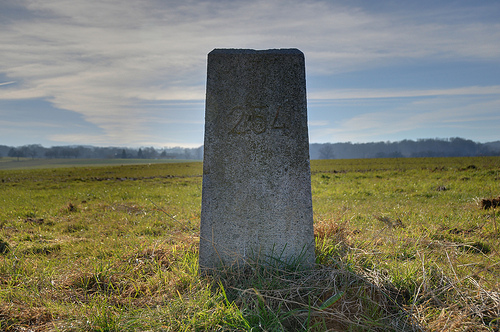
Boundary stone at the Swiss border: deters neither mafiosi, nor human traffickers nor cyber criminals. Photo: Thomas Bresson/flickr

Money laundering by mafiosi, human trafficking and cyber crime: these are the top three security threats identified by the Swiss federal police in their 2010 annual report (German).

What is striking about this list is that each menace is transnational in nature. What does this mean?

For one: as this assessment by the Swiss authorities indicates, police work is no longer the strictly domestic affair it once was. As a result,  international cooperation has become a first-order concern for national law-enforcement organizations.  And this can be very difficult in practice. Take, for example, the fight against the mafia in Italy and Switzerland —  two countries which,  though neighbors, have different legal regimes and requirements for due process.

It is clear that more efforts are needed to  properly track  criminal activity across borders. In this day and age, the police’s concerns cannot remain theirs alone. Everyone dealing with or talking about security should take heed of this annual report and perhaps even adjust their own priorities.
Great IR Thinkers: Robert O. Keohane

In 1965, Robert Keohane completed his PhD dissertation at Harvard University on the politics of the UN General Assembly. The question he tried to answer was whether institutions matter in explaining state behavior, or whether the latter could be deduced solely from the distribution of power. Over 30 years later, Keohane is still examining this question, and the ways in which he dealt with the question over the years have put him on the list of the most important political thinkers of our time.

Life
Keohane was born in 1941 at the University of Chicago Hospitals. When he was 10, the family moved to Mount Carroll, Illinois, where he attended public school; after the 10th grade, at the age of only 16, Keohane was an early entrant to Shimer College, a small offshoot of the College of the University of Chicago, where his parents were professors.

In 1965, he took up a teaching position at Swarthmore College. In 1969, after joining the board of editors for the journal International Organization, which has since become one of the leading journals in the field, Keohane began his remarkable research collaboration with Joseph S. Nye. He moved to California in 1973 to teach at Stanford University. In 1985, Keohane returned to Harvard, where he stayed for the next decade. In 1996, he was appointed James Duke Professor of International Relations at Duke University.

IAEA Conference: Asking the Right Questions?

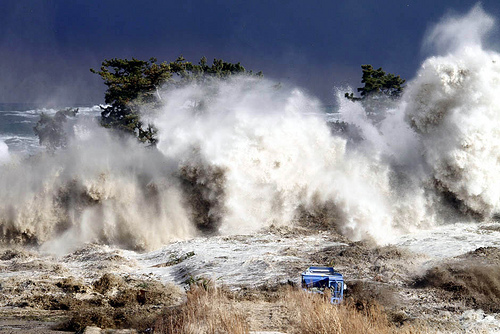
The earthquake and tsunami that hit the Fukushima nuclear plant is a long overdue wake up call. Image: Douglas Sprott/flickr

In the wake of the Fukushima nuclear accident in March, the International Atomic Energy Agency (IAEA) on Monday began a five-day Ministerial Conference on Nuclear Safety in Vienna. The objective, according to Director General Yukiya Amano, is to identify the ‘lessons learned’ from the accident and determine how to improve the Agency’s efforts to increase nuclear safety worldwide. To be sure, public confidence in the safety of nuclear power plants has plummeted in recent months, particularly in Japan and Germany where demonstrators have taken to the streets demanding nuclear energy be phased out.

A glance at the conference‘s stated aims and objectives, and at what the media has thus far reported, suggests that discussion of these  ‘lessons learned’ has focused on : 1) safety in nuclear installations, 2) emergency preparedness, and, 3) effective first-response to accidents.  While the savvy reader will know that the focus of international conferences can change as unpredictably as the weather, a distinct pattern is emerging.

On Monday, the conference adopted a Declaration on Nuclear Safety which expresses the participants’ resolve to enhance nuclear safety around the world. Among the measures it proposes are : 1) enhancing knowledge about nuclear safety; 2) promoting international cooperation and coordination around the issue; and, perhaps most relevantly to Fukushima, 3)  meeting the public expectation to provide “factually correct information and assessments of nuclear accidents.”

But the response to the Fukushima accident must address not just the technical and political issues that have dominated the conference so far but, moreover, how we fundamentally think about nuclear safety. What the Japanese people experienced – an earthquake, followed by a tsunami, followed by a nuclear disaster – should, in this sense, be an urgent wake up call.

Categories
Business and Finance

Some Links on the Euro Crisis

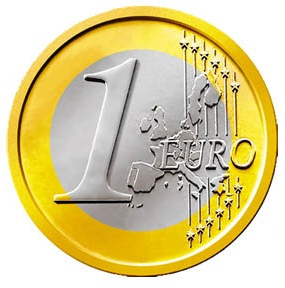
One Euro? Photo: Jose Glez y Lopez/flickr

With the massive protests in Spain over the weekend and calls from respectable quarters for Greece to leave the Euro – which, as Daniel Knowles of the Telegraph succinctly illustrates (echoing Barry Eichengren’s working paper), could have genuinely catastrophic results – the future of the Eurozone is very much in question today in the world media.

Last August, Lorenzo Smaghi, writing for Foreign Affairs, offered an optimistic assessment that put a lot faith in the new financial governance structures – mainly the European Financial Stability Fund (EFSF) – implemented that summer, but that optimism now seems to have been overtaken by events.

Whereas Charles Calomiris, in Foreign Policy, was telling us in January that the Euro was dead, in the May/June print edition of Foreign Affairs, Henry Farrell and John Quiggin offered a proposal to save it – “and the EU.”

Categories
Uncategorized

This Week in ISN Insights…

It's week 25 on our editorial calendar, Photo: Leo Reynolds/flickr

All this week, ISN Insights takes a closer look at China’s evolving foreign relations with key states and political and economic blocs:

  • On Monday, Harsh Pant of King’s College London explains Pakistan’s growing importance to China in its effort to offset growing Indo-US ties.
  • Eddie Walsh of Johns Hopkins’ SAIS examines China’s efforts to alter the bilateral distribution of power vis-à-vis Taiwan on Tuesday.
  • Wednesday’s article from Raffaello Pantucci, of the European Council on Foreign Relations and the Shanghai Academy of Social Sciences, analyzes the complex nature of the strategic partnership between China and Europe.
  • On Thursday, Professor Rupak Borah discusses China’s changing role in the BRICS grouping, now that it has successfully brought South Africa into the fold.

And in case you missed any of last week’s coverage, you can read it here on: NATO and Russia’s historic opportunity for missile defense; the troubled dynamic between gender and UN peace operations; and an assessment of the western Balkans after Mladic.